


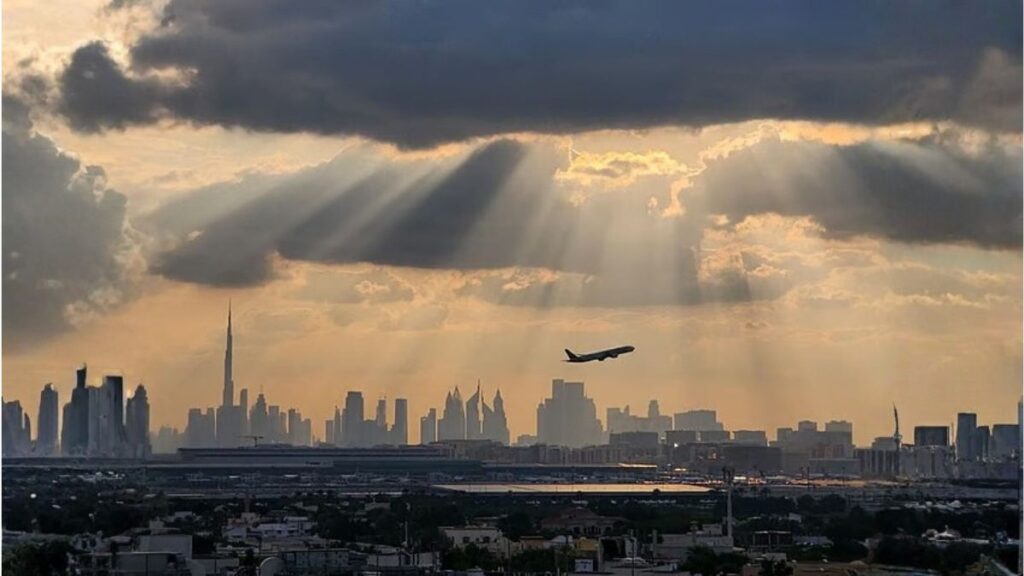
Dubai Property Market 2026: A Strategic Shift in Investment Behavior
Across the Gulf real estate market, particularly within the Dubai real estate market, key indicators remain strong. Transaction volumes in Dubai property investment are holding at historically high levels, foreign direct investment (FDI) continues to flow into the UAE, and demand for prime residential and luxury waterfront assets remains intact.
Yet in 2026, the behavior behind Dubai real estate investment decisions has evolved.
From an investor’s perspective, the urgency that defined the Dubai property surge of 2024–2025 has matured into disciplined capital deployment. Investors are no longer entering the Dubai property market 2026 on momentum alone. Instead, they are underwriting assets like institutional portfolio managers, stress-testing Dubai rental yields 2026, evaluating long-term capital appreciation in Dubai, reviewing developer balance sheets, and assessing macroeconomic resilience before allocating capital.
This is no longer emotional buying. This is strategic wealth positioning within the UAE real estate market.
Is Dubai Real Estate a Safe Investment in 2026?
Global uncertainty from currency volatility to geopolitical tensions has not weakened demand for UAE real estate investment. On the contrary, it has strengthened Dubai’s position as a safe-haven property market and a preferred destination for global wealth preservation.
High-net-worth individuals (HNWIs), family offices and international investors continue to choose Dubai investment property because the fundamentals remain compelling:
- Zero property tax environment
- No capital gains tax
- Strong regulatory framework
- Political and economic stability
- Globally competitive rental yields
Compared to mature markets such as London, New York or Singapore, where rental yields often range between 2–4%. Dubai rental yields in prime areas continue to average significantly higher, making the Dubai real estate market 2026 attractive from a pure ROI standpoint.
However, investors are now asking sharper, more sophisticated questions:
- Is this Dubai property resilient during global downturns?
- What does the long-term supply pipeline look like?
- Is the developer financially stable?
- Are service charges sustainable?
- What is the realistic 5–10-year capital appreciation forecast?
This is not hesitation. It is market maturity.
From Speed to Due Diligence: How Buyers Are Investing in Dubai in 2026
In 2025, speed determined access. In 2026, analysis determines conviction.
Investors evaluating Dubai investment property are now comparing:
- Prime areas such as Downtown Dubai and Palm Jumeirah vs emerging growth corridors
- Off-plan property payment plans vs ready-property cash-flow assets
- Gross rental yield vs net rental yield after service charges
- Branded residences vs traditional freehold developments
- Lifestyle-driven demand vs investor-driven demand
According to Donna Lee-Elliott, Chief of Sales at OCTA Properties, geopolitical headlines have not removed demand, they have sharpened decision-making within the Dubai property market.
From an investor POV, this translates into stronger preference for:
- Prime Dubai locations with proven capital appreciation
- Tier-one developers with established delivery records
- Master-planned communities with retail, education and infrastructure integration
- Assets aligned with long-term UAE economic growth
ROI & Capital Appreciation in Dubai Real Estate 2026
The dominant conversation in the Dubai real estate market 2026 is no longer short-term flipping. It is sustainable return on investment (ROI) and long-term capital growth.
Investors are prioritizing:
- Stable long-term Dubai rental yields
- Capital appreciation driven by infrastructure expansion
- Supply-demand imbalance in beachfront and branded luxury segments
- Golden Visa-linked property investment strategies
- Exit liquidity in the secondary Dubai property market
With strong population growth, business migration, and continued infrastructure investment, Dubai’s real estate fundamentals remain structurally supported.
But the difference today? Investors are underwriting based on data, not headlines.
Selectivity Is the New Strength in the Gulf Property Market
Buyer sentiment in 2026 across the Gulf property market, especially in Dubai, is not weak. It is selective.
Investors choosing Dubai property are focusing on:
- Reputable developers with audited track records
- Projects supported by long-term master planning
- Communities offering genuine livability and rental demand
- Assets aligned with global wealth preservation strategies
The Dubai real estate market is transitioning from rapid expansion to institutional-style evaluation.
For serious investors, this is not a warning sign. It is the foundation of a sustainable growth cycle.
The Bottom Line: Dubai Investment Property in 2026
Dubai in 2026 is no longer just about opportunity, it is about strategic capital allocation within one of the world’s most dynamic property markets.
Capital continues to flow into Dubai real estate investment. Demand remains strong. Rental yields remain globally competitive. Tax efficiency remains unmatched.
But investors are sharper.
The winners in the Dubai property market 2026 will not be those who move fastest, They will be those who evaluate fundamentals, prioritize long-term capital appreciation, and structure their portfolios with discipline.
And in global real estate cycles, disciplined capital consistently outperforms impulsive capital.
If you’d like to discuss your next move one-on-one, CONTACT US