
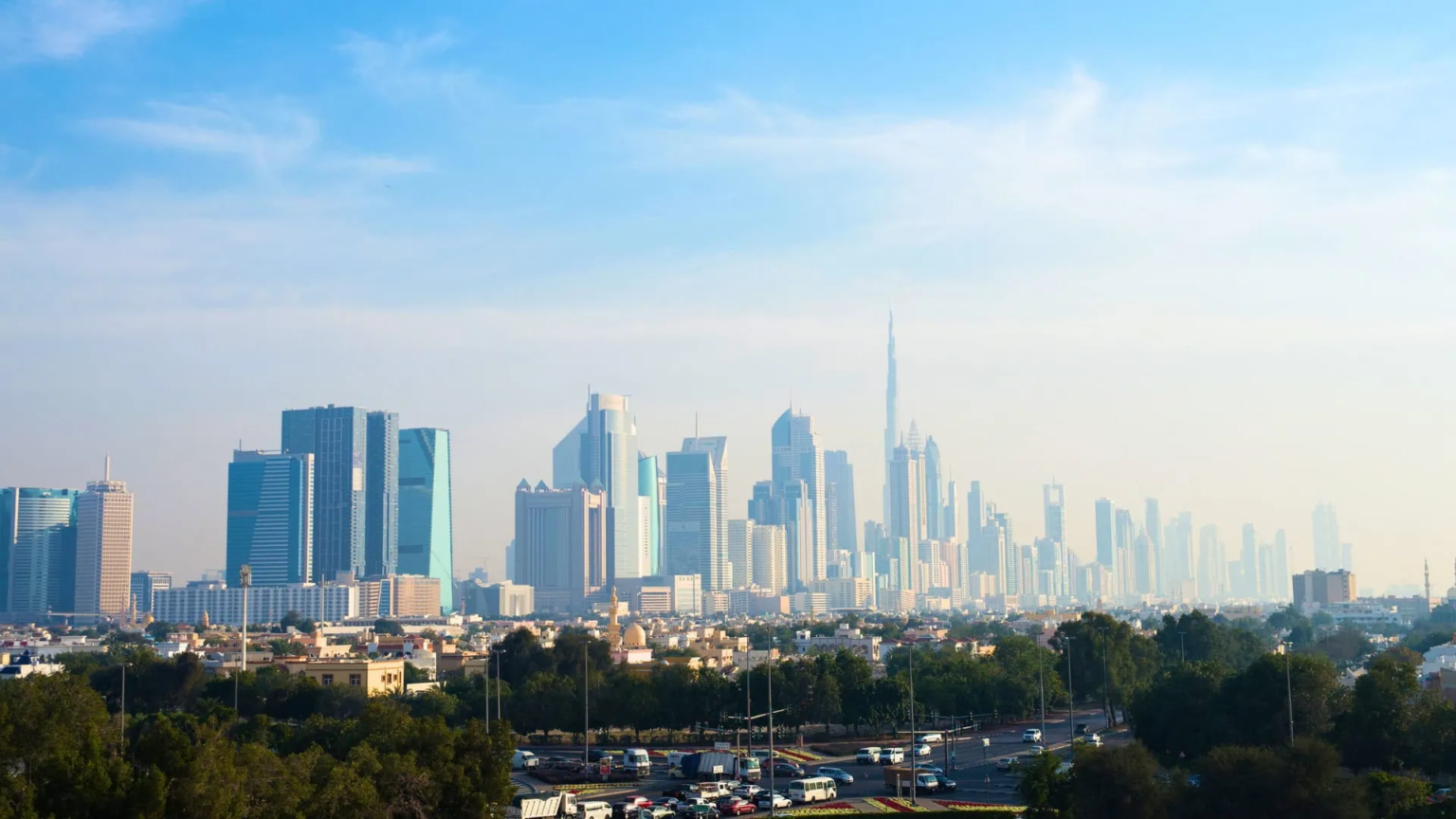
Dubai’s Property Buyers Are Evolving
What That Means for the Market in 2026? Buyer Behavior & Market Psychology
Something fundamental has shifted in how people buy property in Dubai. The urgency-driven momentum of 2024 and much of 2025, where buyers rushed decisions for fear of missing the cycle, has given way to a more deliberate, analytical, and fundamentals-focused psychology. Understanding this evolution is key to understanding where the market is heading next.
The Mindset Shift: From Urgency to Strategy
Dubai’s real estate cycle between 2022 and 2025 was characterized by fear of missing out. Rising prices limited ready inventory, and an explosion of off plan launches created a frenetic market where speed of decision-making was rewarded. Buyers moved fast. The questions were brief. Branding and momentum did the heavy lifting.
In 2026, that psychology has evolved. As Gulf News reported in its landmark property outlook, in 2025, momentum drove decisions, but 2026 is the year when buyers and investors operate with far more logic and discipline. Buyers are now scrutinizing developers more closely, paying greater attention to connectivity, infrastructure logic, and resale fundamentals than to launch-day hype.
This doesn’t mean demand has softened, quite the opposite. Dubai recorded 202,349 residential sales transactions in 2025, a figure 464% higher than 2021. The difference is in the quality and depth of the decision-making process behind each transaction.
The 2026 Buyer Archetype: Analytical, Selective, Long-Term
▸ Evaluating full investment equation: location fundamentals, delivery timelines, build quality, operating costs
▸ Prioritizing developer credibility and proven track record over marketing narrative
▸ Factoring infrastructure proximity, Metro Blue Line, road upgrades, into pricing logic
▸ Focusing on long-term community livability: schools, walkability, employment access
▸ Comparing multiple projects before committing, with longer decision cycles for off plan
The Great Rent-to-Buy Shift: When Residents Decide to Stay
One of the most consequential behavioral shifts playing out in Dubai’s market is the growing preference for ownership over renting, a change with profound structural implications. According to Property Finder’s bi-monthly consumer sentiment poll, approximately 70% of respondents plan to buy a property within the next six months, signaling sustained purchasing intent heading into 2026.
Platform-level data confirms this intent. The share of sale-listing impressions on Property Finder rose from 47% in 2024 to 49% in 2025, while rental impressions declined correspondingly, a clear behavioral tilt toward homeownership. This is supported by a parallel data point from Mortgage Finder: home mortgage spend as a percentage of median income increased from 23% in 2024 to 31% in 2025, indicating that buyers are not only committed to purchasing, they’re willing to allocate a significantly larger portion of their income to do so.
What is driving this shift? Three interconnected forces. First, the UAE Golden Visa programmed links 10-year residency rights to property ownership at AED 2 million and above, creating a direct legal incentive to buy. Second, Dubai’s First-Time Home Buyer (FTHB) Programmed has already enabled over 2,000 residents to purchase their first homes, generating more than AED 3.25 billion in sales in just six months. Third, a growing cohort of long-term expatriates who have made Dubai their permanent home is choosing to build equity rather than rent indefinitely in a market where rental growth has averaged 8% or more annually.
The Luxury & Super-Luxury Segment: A Market Within a Market
At the high end of the buyer’s psychology spectrum, a distinct behavioral pattern emerged. Ultra-high-net-worth buyers, many of them relocating from Europe, Asia, and North America, are driving a sustained boom in Dubai’s luxury and super-luxury residential segment. These buyers prioritize three factors above all others: lifestyle, political stability, and long-term residency optionality.
According to Property Finder’s 2025 annual market report, premium and luxury homes above AED 2,500 per square foot accounted for 20% of the market in 2025, up from 15% in 2024. Luxury listings rose 27%, keeping pace with demand fueled by high-net-worth inflows and an estimated USD 63 billion in incoming wealth.
This demand is not confined to legacy locations. While the secondary market remains anchored in Downtown Dubai, Palm Jumeirah, and Dubai Marina, off-plan luxury demand is extending into relatively newer communities, Dubai Harbour, Maritime City, and emerging waterfront precincts indicating a maturing buyer who understands that value migration creates the most meaningful capital appreciation.
Premium properties (AED 2,500+/sqft) market share: 20% in 2025, up from 15% in 2024
Luxury listings growth: 27% increase in 2025
Incoming wealth to Dubai: USD 63 Billion in high-net-worth inflows
Villa price growth (2025): +14% YoY outpacing apartments at +6%
What Are Buyers Actually Choosing? Apartment vs Villa Psychology
While luxury drives the headlines, the volume story is about apartments. Apartments dominated residential transactions in 2025, accounting for 93% of all residential deals, up from 90% in 2024. This reflects the healthy supply of apartment stock, which offers buyers wider choice across price points, layouts, and community types.
Within apartments, studios gained meaningful share, rising from approximately 22% of apartment transaction volumes in 2024 to 25% in 2025, driven by strong rental economics and investor appetite for yield-generating entry-level assets. One- and two-bedroom units together account for 74% of total apartment demand, reflecting a clear preference for practical, liveable configurations over purely speculative micro-units.
The villa story is the opposite of abundance. Supply remains structurally constrained, which is why villa prices grew 14% year-on-year versus 6% for apartments, despite lower absolute transaction volumes. Buyers seeking villas are concentrated in master-planned communities at DAMAC Hills 2, Dubai Hills Estate, Al Furjan, and Emirates Living, that offer family-oriented infrastructure, greenery, and commute-accessible location.
The Geography of Buyer Intent: Where Demand Is Concentrating
Buyer behavior is also highly geographic, and 2025–2026 data reveals clear patterns in where demand is concentrating and why. In the apartment segment, Jumeirah Village Circle (JVC) continues to lead overall demand, driven by its price-to-rent ratio and newer development quality. Dubai Marina, Business Bay, Downtown Dubai, and Dubai Creek Harbour round out the top five, each commanding buyer interest for distinct reasons: lifestyle prestige, business proximity, and infrastructure momentum respectively.
What’s increasingly shaping location decisions is future infrastructure adjacency. Communities on or near the planned Blue Metro Line route, International City, Al Warqa’a, Dubai Silicon Oasis, Mirdif, are already attracting forward-looking buyers who are pricing in a connectivity premium that doesn’t yet exist but will materialize between 2026 and 2029. This is sophisticated forward-looking buyer behavior: purchasing present-day prices to capture future-state value.
Geopolitical Psychology: How Global Uncertainty Shapes Dubai’s Buyer Pool
Dubai’s property market has always benefited from global instability, and 2026 is proving no exception. As reported by Gulf News, heightened geopolitical uncertainty across Europe, Asia, and parts of the Middle East has intensified interest in Dubai’s stable, tax-neutral, rule-of-law property framework. When global uncertainty increases, buyers move toward what feels safe and predictable, noted Ajay Rajendran of Meraki Group.
The behavioral response to this dynamic is a dual movement: on one hand, a wait-and-watch posture from some investors who are taking longer to commit. On the other hand, an accelerated flight-to-quality impulse among capital-preservation buyers, high-net-worth individuals and institutions who see prime Dubai real estate as a safer store of wealth than volatile equities or currency-risk-exposed assets in other markets.
This creates a bifurcated market psychology: cautious, analytical decision-making at the entry and mid-market level, and confident, swift action at the prime and ultra-prime end where scarcity drives decisiveness.
The Data-Driven Buyer: How Technology Is Changing the Search Behavior
The 2026 Dubai buyer is also better informed than any buyer cohort in the market’s history. The Dubai REST app, DLD’s digital transaction portal, the Smart Rental Index, and property portals like Property Finder and Bayut have democratized access to market data that was previously available only to professional investors. Buyers now come to viewings already knowing the price-per-square-foot history of a building, the community’s Ejari registration activity, and the developer’s completion record on previous projects.
Bayut’s March 2026 data showed that engagement with sales listings remained active and highly concentrated in the same core communities, indicating that even in a period of uncertainty, informed buyers know where they want to be. They are not retreating from the market; they are narrowing their targets.
This behavioral maturation, from aspirational FOMO buying to data-informed strategic purchasing, is ultimately a sign of market growth. And for serious investors and brokers, it represents an opportunity: the buyers who remain active in 2026 are the most committed, the most qualified, and the most likely to transact successfully. The era of selling impulse has ended. The era of selling conviction has begun.
Whether you’re evaluating your first purchase, repositioning your portfolio, or exploring high-growth communities aligned with future infrastructure, the key is having the right data, access, and strategy behind your decisions.
Let’s turn insight into action. CONTACT US!
